

Co-founder · Stand-up · Storytelling · Pitch
Forbes Shannon
Turns real-life chaos into a story worth hearing. Then gives it a punchline.
Your life has material. Please stop leaving it in the group chat.
- Sets performed
- 100s
- Stories turned into bits
- 100s
- Dead rooms survived
- Uncounted

The story
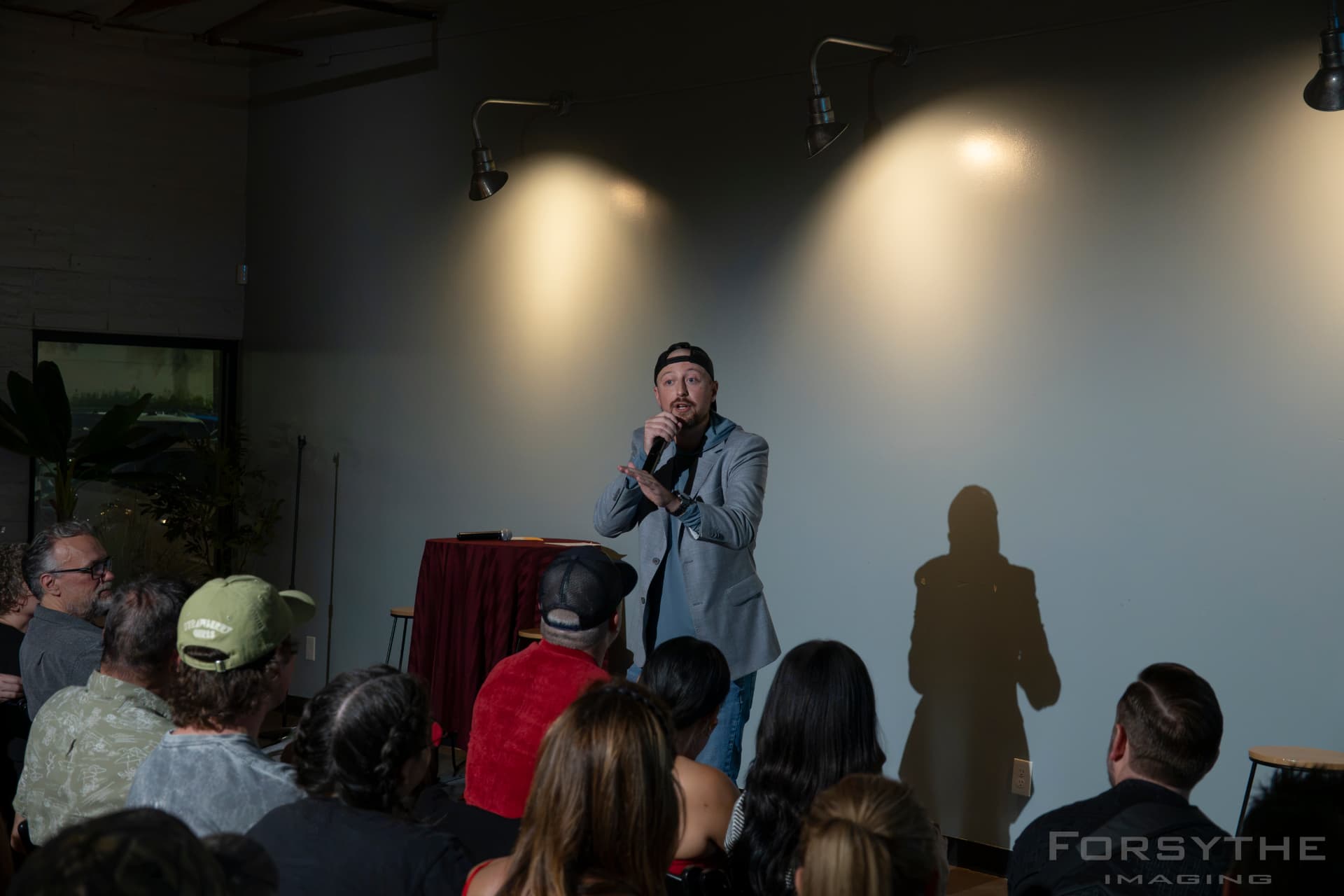
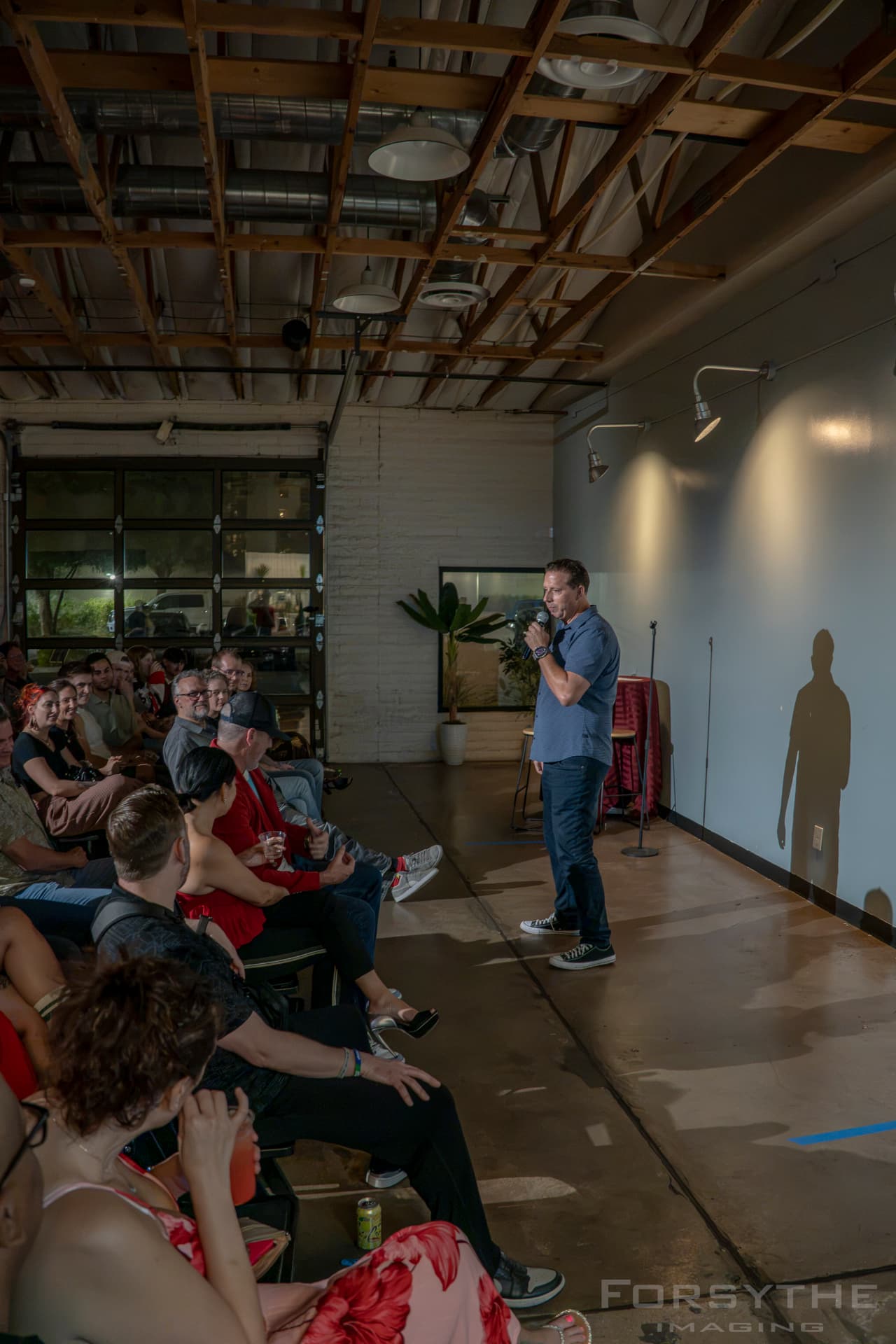
Forbes Shannon is a stand-up comedian, writer, FUNNYAF co-founder and Arizona After Dark co-host. He turns personal stories into comedy with stakes, structure and a twist. The embarrassing part of your life? That's not a detour. That's probably the opener.
His territory is startup storytelling, personal narrative and pitch-as-performance: finding the human story underneath the explanation, then giving the audience a reason to care. If your pitch needs forty slides before anything happens, the story may be hiding behind a pie chart.
At FUNNYAF, Forbes connects premise work and bit architecture to stories that travel from the stage to the meeting room. Keep the detail that earns the laugh. Lose the scenic route. Give the ending a job other than 'and then I went home.'
He and Aaron bring two different instincts to the same room: Aaron follows the live surprise; Forbes builds the story that makes it land. One says 'yes, and.' The other wants to know where the callback goes. Somewhere in the middle, there's a show.
“If they remember the story, they remember you. Make the story funny and they'll repeat it for you.”
What Forbes teaches
The part of the system he owns.
Startup storytelling & pitch
Turn an idea into a human story with stakes, surprise and a repeatable takeaway — on stage or in the pitch room. The deck is not the main character.
Bit architecture
Premise, assumption, reinterpretation, punch, tag. Build the skeleton so every line earns its laugh.
Personal narrative engine
How to find the story you already own, build it scene by scene, and know which details to keep because they do the work the laugh does.
Forbes' signature moves
Steal the mechanics, not the material.
Four stand-up storytelling moves, taken apart beat by beat. Click through the construction, then do the drill. The move transfers; the story has to be yours.
learn the move → tell YOUR story → that's the whole trick
Reference an earlier real failure in the middle of a new bit. The room suddenly understands the whole arc.
Why it worksCallbacks work because the audience did half the work earlier. When Forbes circles back to a failure he already confessed, the laugh is recognition, not surprise — and recognition is stickier.
Watch the move get built
1 / 5
Plant
Early in the set: confess a small, specific failure.
“I once introduced myself to the same woman at three different parties. Same opener. She noticed. I didn't.”
Drill · Two-story braid
Write two unrelated true stories from your own life, three sentences each. Now find the word, object, or person they secretly share — and write the single line that snaps them together.
3 braids · 15 minutes · say the callback out loud
Signature moves
The Life Callback
References an earlier real failure in the middle of a new bit and the room suddenly understands the whole arc.
Vulnerability as Setup
Leads with the thing that should make him look small, then flips it into authority.
The Premise as Set List
Treats every premise as a scene and every tag as the next reason to keep listening.
“The best set doesn't convince anyone. It makes the room feel smart for getting it.”

Train with the people who actually do this on a Friday.
The other one
Aaron Bare →